

Promotional products for colleges are more than just giveaways; they're tangible marketing tools that forge real connections with students, alumni, and faculty. Think about it—items like a branded t-shirt, a sturdy water bottle, or a classic notebook can turn people into walking brand ambassadors. They help build a sense of community and school pride in a way that digital ads often can't.
Why College Promotional Products Matter More Than Ever

In the incredibly competitive world of higher education, standing out is everything. Digital marketing campaigns are great for reaching a wide audience, but they often miss the personal touch that builds true loyalty. This is where promotional products really shine.
A well-chosen item becomes part of a student’s daily life, transforming a simple logo into a genuine symbol of belonging. Imagine a prospective student sorting through a flood of emails from different universities. Now, picture that same student at a college fair, being handed a high-quality, branded notebook. That physical item creates a memorable connection and serves as a constant, tangible reminder of your institution long after the event is over.
The Psychology of Tangible Marketing
The real magic of promotional products is how they engage the senses. Holding a well-made pen or wearing a comfortable hoodie forges a much deeper connection than just seeing an ad flash across a screen. This creates a powerful psychological bond between the person and your institution. These items aren't just marketing expenses; they are smart investments in building a vibrant and connected campus culture.
Here’s why these products are so effective:
- Building Community: Shared merchandise, like team apparel or event-specific lanyards, visually unites everyone and reinforces a strong sense of collective identity.
- Boosting Recruitment: A useful or clever promotional item at an open house can leave a lasting positive impression on prospective students and their families.
- Nurturing Alumni Loyalty: Sending quality branded gifts to alumni is a fantastic way to maintain a strong, positive relationship, which can encourage continued engagement and donations.
A Cornerstone of Educational Marketing
The numbers back this up. The US education sector is the single largest buyer of promotional products, accounting for 13.1% of the industry's total revenue. That translates to roughly $3.6 billion spent annually. In fact, for nine of the last ten years, educational institutions have consistently outspent every other sector.
By transforming students, faculty, and alumni into proud brand ambassadors, colleges create a powerful and authentic marketing force. Each branded tote bag or water bottle becomes a mobile billboard, extending the institution's reach far beyond the campus grounds.
This strategy is a fundamental part of how to increase brand awareness effectively. A single branded t-shirt can generate thousands of impressions over its lifespan, offering an incredible return on investment compared to fleeting digital ads. Ultimately, promotional products for colleges help weave your institution's story into the very fabric of the campus community, creating advocates for life.
Building a Smarter Promotional Product Budget
Figuring out how much to spend on promotional products for your college shouldn't be a shot in the dark. A good budget isn't just another line item on a spreadsheet; it's a strategic investment that helps you hit real goals, whether that's boosting enrollment or getting alumni more involved.
Think of your budget as a blueprint for success. Instead of just buying stuff, you're tying every dollar to a clear purpose. This simple shift turns your spending from a cost into a marketing engine that you can actually measure.
And this investment is more important than ever. Colleges and universities are putting more money into marketing to stay competitive. In fact, they're now spending about 11.9% of their revenue on marketing, and the average budget for online and professional programs is expected to reach $1.18 million by 2025. That's a serious amount of money, and it shows just how vital things like branded merchandise are for recruitment, campus life, and alumni relations. If you want to dive deeper, you can explore more university marketing statistics to see what you're up against.
Calculating Your Return on Investment
It might seem tough to measure the impact of a physical giveaway, but it’s easier than you think. The trick is to build tracking right into the products themselves.
One of the best ways to do this is with a QR code. Picture this: you’re at a recruitment fair handing out branded notebooks. A simple QR code on the cover can take a prospective student straight to an application landing page, a virtual campus tour, or an info request form.
By tracking how many people scan that code, you can connect website visits and new leads directly back to that notebook. Suddenly, you have hard data to show stakeholders exactly how your investment is paying off.
Strategies for Smart Purchasing
Getting the most out of your budget without skimping on quality is the name of the game. Smart purchasing isn't about finding the absolute cheapest item; it's about getting the best value and making the biggest impression.
- Leverage Bulk Orders: The more you order, the less you pay per item. It's that simple. Plan your calendar and lump together orders for big events like freshers' week and alumni weekend to get the best possible price.
- Focus on Perceived Value: An item doesn't have to cost a lot to feel valuable. A well-designed, sturdy tote bag or a sleek metal pen feels much more premium than a flimsy plastic one—and it’s more likely to be used for years.
- Choose Versatile Products: Pick items that work for different groups. A quality power bank, for example, is just as useful to a prospective student as it is to a current one or a visiting professor.
A promotional product budget works best when it's tiered. By assigning funds across different product levels, you can match the giveaway to the audience and the occasion, making sure every item feels right and makes an impact.
Allocating Funds Across Tiers
Not every event or recipient is the same, so your budget shouldn't be either. A tiered approach helps you have the perfect product ready for any situation. Many of the same principles apply to corporate gifting, so you can find more inspiration by looking at corporate gift ideas for clients.
Tier 1: Affordable Giveaways
These are your workhorses for big events like open days and campus tours where you need a lot of items.
- Goal: Widespread brand awareness.
- Examples: Custom pens, lanyards, stickers, and button badges.
- Budget Allocation: This will be the largest chunk of your quantity but at the lowest cost per item.
Tier 2: Mid-Range Merchandise
Save these for more targeted moments, like in welcome kits for admitted students or as thank-you gifts for volunteers.
- Goal: Creating a stronger, more personal connection.
- Examples: Branded t-shirts, reusable water bottles, and quality notebooks.
- Budget Allocation: A moderate cost per item for a more memorable giveaway.
Tier 3: Premium Gifts
These are for the special occasions—honoring distinguished alumni, thanking guest speakers, or showing appreciation to major donors.
- Goal: Demonstrating high value and strengthening key relationships.
- Examples: Engraved portfolios, high-end tech accessories, or premium branded apparel.
- Budget Allocation: The highest cost per item, but used sparingly for maximum effect.
Choosing Products That Connect with Your Campus Audience
The best promotional product isn't the most expensive one; it's the one someone actually wants to use. Think about it. Giving a sleek power bank to a prospective student who lives on their phone sends a clear message about innovation. Handing a cozy, branded hoodie to a current student taps directly into their sense of campus pride. Each choice tells a story.
Success comes from moving beyond generic junk and picking items that genuinely resonate with the different communities on your campus. It’s all about matching the product to the person, which turns a simple giveaway into a meaningful connection.
Tailoring Products to Key Demographics
Your campus is a living, breathing ecosystem filled with unique groups, and what motivates a first-year student is completely different from what an alumnus values. A one-size-fits-all approach is a recipe for wasted budget. Instead, let's break it down.
- Prospective Students: This group is looking for signs that your institution is modern, supportive, and gets them. They live on their devices, so think wireless chargers, phone wallets, or high-quality earbuds. These items immediately signal that you understand their world.
- Current Students: For them, it's all about school spirit, community, and pure practicality. Classic promotional products for colleges are classics for a reason—comfortable hoodies, durable tote bags for lugging books, and reusable water bottles are always a hit. They want gear that's useful and lets them rep their school.
- Faculty and Staff: Professionalism and utility are the name of the game here. A sophisticated metal pen, a handsome leather-bound journal, or a portable coffee press shows you appreciate their role and respect their work.
- Alumni and Donors: This group appreciates tradition, quality, and a sense of recognition. Premium gifts like an engraved desk clock, a high-end travel mug, or custom apparel from a respected brand reinforce their prestigious connection to your institution.
To make the best choices, it helps to map out your audience and goals. This simple table breaks down how to align your product selection with the different segments of your campus community.
Matching Promotional Products to Campus Audiences
| Audience Segment | Top Product Categories | Example Items | Strategic Goal |
|---|---|---|---|
| Prospective Students | Tech Gadgets, Modern Essentials | Wireless Chargers, PopSockets, Reusable Straws | Showcase innovation and relevance; create a positive first impression. |
| Current Students | Apparel, Drinkware, Study Aids | Hoodies, Water Bottles, Highlighters | Foster school pride and community; provide daily utility. |
| Faculty & Staff | Office Supplies, Premium Drinkware | Engraved Pens, Leather Portfolios, Insulated Mugs | Show appreciation and professionalism; offer high-quality, useful tools. |
| Alumni & Donors | High-End Gifts, Travel Items | Branded Outerwear, Leather Luggage Tags, Desk Accessories | Nurture long-term relationships; acknowledge and reward their support. |
Thinking in these terms ensures that every dollar you spend is strategically placed to make the right impression on the right person.
This infographic breaks down the decision-making process even further, helping you align your budget and choices with specific goals like recruitment or alumni engagement.
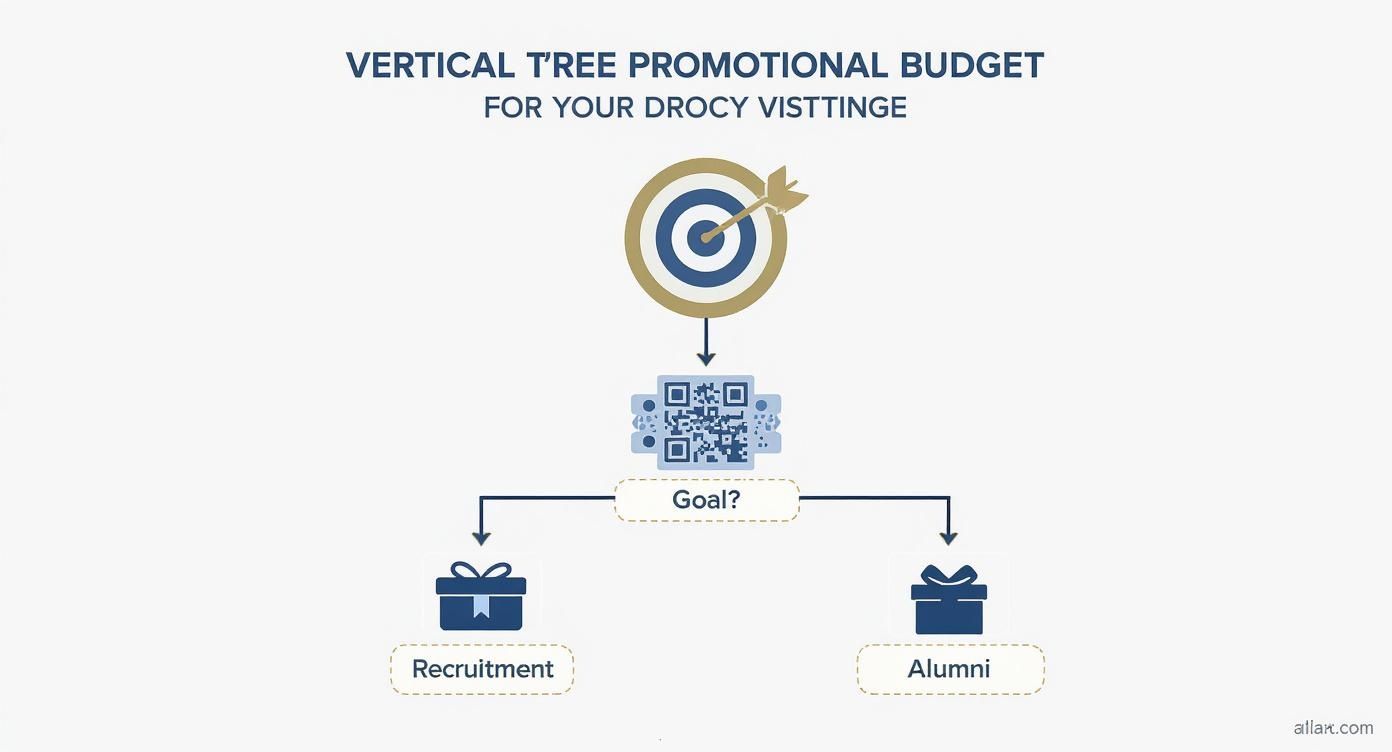
As you can see, starting with a clear objective—like attracting new students versus thanking donors—sends you down completely different paths for product selection.
Aligning Products with Your Brand Story
Beyond demographics, the best swag reflects your college's unique identity. If your university is a powerhouse in environmental science, an eco-friendly water bottle or a notebook made from recycled materials just makes sense. It’s an authentic expression of your core values, not just a random giveaway.
This alignment adds a layer of meaning that transforms a product into a statement. And it’s a big market—the global promotional products industry is projected to hit $27.5 billion by 2025. Apparel leads the pack at $5.4 billion, largely driven by university gear that creates lasting visibility. Drinkware and other home goods are also huge, valued at $2.9 billion, proving that practical, everyday items are incredibly effective at carrying a brand’s message.
The goal is to choose an item that makes someone think, "This is so us." When the product feels like a natural extension of your brand's personality, it forges a much deeper and more memorable connection.
A Practical Decision-Making Checklist
Okay, so how do you pull this all together? Choosing the right product can feel overwhelming, but a simple checklist can cut through the noise. Before you click "order," run your top contenders through these four questions.
For a little extra inspiration on what's working right now, check out our guide to the best swag ideas that are making an impact.
Here’s a quick gut-check for any potential item:
- Is it genuinely useful? An item that solves a problem or fits into daily life—a pen that writes like a dream, a tote bag that’s the perfect size—is far more likely to be kept and used.
- Will it last? Durability matters. A cheap, flimsy product reflects poorly on your brand and will end up in a landfill, wasting your investment and leaving a bad taste.
- Is it a true brand ambassador? The product is a physical piece of your brand. It needs to visually and functionally represent your institution's standards and values.
- Does it spark a little joy? The best items are just delightful to receive. A soft-touch notebook or a sleek, well-designed water bottle creates a positive moment that people will associate with your college.
Designing Merchandise That Gets Noticed
Let's be honest: great design is what separates a promo item that gets tossed in a drawer from one that becomes a favorite pen or go-to tote bag. Anyone can slap a logo on a product, but that rarely gets people excited. To create truly memorable promotional products for colleges, you need to think more like a brand designer and less like a marketer just checking a box.
The real goal is to craft merchandise that feels intentional, cohesive, and genuinely valuable. A well-designed notebook or hoodie doesn't just show off your logo; it embodies your university's spirit. It tells a story of community and quality before anyone even reads the text.
Choosing the Right Customization Method
How you put your design on a product is just as crucial as the design itself. Each technique offers a completely different look, feel, and price point, so matching the method to the material and your goals is key. Think of it like this: you wouldn't use a paint roller for fine-detail work.
Here’s a quick rundown of the most common options:
- Screen Printing: This is the classic method of pushing ink through a mesh screen. It's fantastic for things like t-shirts, tote bags, and notebooks where you want bold, vibrant colors. It’s also one of the most cost-effective choices for large orders.
- Embroidery: By stitching your design directly into the fabric with thread, embroidery gives a premium, textured feel. This is the go-to for polo shirts, caps, and backpacks, lending a durable, high-end finish that screams quality.
- Laser Engraving: This technique uses a laser to etch a design into a hard surface with incredible precision. It’s perfect for metal pens, wooden keyrings, or glass awards, creating a sharp and permanent result that feels sophisticated.
Picking the right technique ensures your design not only looks fantastic but also lasts. A screen-printed logo, for example, might peel off a metal water bottle over time, whereas an engraved one will last forever.
Key Principles for Effective Design
A polished, professional look goes way beyond just the logo. To create a product line that feels connected, you need a consistent set of design rules that reinforce your college’s identity on every single item.
Logo Placement Matters
Where you place your logo can completely change its impact. A giant logo plastered across the chest of a t-shirt can feel like a walking billboard. In contrast, a more subtle, thoughtfully placed logo often comes across as more stylish and is far more likely to be used or worn regularly.
Try thinking about alternative placements:
- On the sleeve of a hoodie.
- Tucked away in the bottom corner of a notebook.
- As a small, branded tag on the side of a tote bag.
This subtle approach can make the product feel less like a free giveaway and more like a desirable piece of retail merchandise.
A great design strategy doesn't shout; it whispers. It integrates the brand into the product in a way that feels authentic and adds to its appeal, rather than overpowering it.
Mastering Your Color Palette
Your school’s colors are a powerful asset, but there’s an art to using them well. Instead of just splashing your primary colors on everything, think about how to use them to create a design that feels modern and attractive. A good rule of thumb is to use one color as the dominant base and the other as a pop of accent.
The Ultimate Artwork File Checklist
Nothing grinds a production timeline to a halt faster than a poorly prepared art file. Technical hiccups can cause delays, add unexpected costs, and result in a final product that looks nothing like you imagined. To sidestep these common issues, run through this checklist before sending your files to any supplier.
- Use Vector Files: Always, always provide your logo and design elements in a vector format (like .AI, .EPS, or .SVG). Vector files can be scaled to any size without getting blurry, guaranteeing a crisp, clean print every time.
- Outline All Fonts: Make sure you convert all text to outlines or curves. This simple step turns the letters into shapes, so the printer doesn't need to have your specific font installed to reproduce the design perfectly.
- Specify Pantone Colors: If your brand has official colors, provide the Pantone Matching System (PMS) codes. This is the only way to ensure your colors look consistent across different products and print runs.
- Check Resolution for Images: If you absolutely have to use a pixel-based image (like a JPEG or PNG), make sure it has a resolution of at least 300 DPI (dots per inch) at the final print size. Anything less will look blurry and unprofessional.
Getting Your Products into the Right Hands
You've designed the perfect product, but your work isn't done yet. In fact, the most important part is just beginning. Even the most amazing branded gear is useless if it just sits in a box. The real magic happens when you get the right item into the right hands at exactly the right moment.
https://www.youtube.com/embed/TBjcnjBiUlY
Think of your promotional items like seeds. You can’t just toss them out randomly and expect a forest to grow. You have to plant them in fertile soil—those key moments in the academic year when students, staff, and alumni are most open to what you have to say.
Strategic Distribution for Key Campus Moments
Timing is everything. A well-placed giveaway can turn a routine campus event into a truly memorable experience, making your brand a welcome part of the college journey.
-
Recruitment Fairs and Open Days: This is your first handshake with potential students. Your team needs to be ready with practical welcome kits. Think branded pens, sharp-looking notebooks, and maybe a phone wallet. These are things they'll use immediately, keeping your university at the front of their minds while they're making their big decision.
-
Move-In Day and Freshers' Week: The first few days on campus are a whirlwind of excitement and a little bit of chaos for new students. Be the brand that helps. Welcome them with useful dorm room gear like laundry bags, desk organizers, or a sturdy reusable water bottle. You're not just giving them a thing; you're solving a problem and embedding your brand into their daily life from day one.
-
Alumni Weekends and Donor Events: These events require a different, more elevated approach. This is the time to show genuine appreciation and strengthen that lifelong bond. Opt for premium gifts like an engraved portfolio, a high-end travel mug, or quality tech accessories. A gift that feels substantial tells them you value their continued support.
A great distribution plan turns promotional products from simple giveaways into strategic assets. Each item becomes a touchpoint, purposefully placed to build community, encourage engagement, or show gratitude at every stage of the campus journey.
To help you map this out, here’s a simple framework for aligning your products with your campus calendar.
Event-Based Promotional Product Distribution Plan
This strategic matrix outlines key college events, target audiences, recommended products, and effective distribution tactics to maximize campus engagement.
| Event Type | Target Audience | Recommended Products | Distribution Tactic |
|---|---|---|---|
| Open Days & Tours | Prospective Students & Parents | Tote Bags, Pens, Notebooks, Phone Wallets | Hand out in welcome kits upon registration. |
| Freshers' Week | New Undergraduate Students | Water Bottles, Laundry Bags, Lanyards | Include in official welcome packs or distribute at dorm check-in. |
| Career Fairs | Current Students & Recent Grads | Padfolios, Stylus Pens, Portable Chargers | Offer at your booth to students who share their contact information. |
| Alumni Homecoming | Graduates & Donors | Engraved Glassware, High-End Apparel | Distribute as a premium gift at registration for alumni events. |
| Sporting Events | All Campus Community | T-Shirts, Foam Fingers, Rally Towels | Launch into the crowd or give to the first 500 fans at the gate. |
This kind of planning ensures you're not just handing out swag, but making a deliberate and impactful connection with each audience.
Leveraging Ongoing Distribution Channels
Beyond the big events, daily life on campus offers a steady stream of opportunities to keep your brand visible and build school spirit.
The Campus Bookstore
The bookstore is more than a shop; it's a campus hub. Instead of just stocking merchandise, use it as a smart distribution channel. You could offer a free, exclusive tote bag with purchases over a certain amount or slip a branded bookmark into every textbook sold.
Athletic Events
Nothing beats the energy of game day. Tap into that excitement by launching t-shirts from cannons, handing out foam fingers at the entrance, or giving away rally towels. You're directly associating your brand with the peak moments of school pride and passion.
Turning Giveaways into Interactive Experiences
Let's take this a step further. A promotional product shouldn't be where the conversation ends—it should be where it begins. By adding a simple interactive element, you can connect your physical merch to your digital world.
A QR code is the perfect tool for this. A quick scan of a code on a notebook or water bottle can:
- Link to a campus resource hub for new students.
- Drive traffic to a social media contest.
- Direct users to a landing page to sign up for an alumni newsletter.
- Unlock an exclusive discount for the campus store.
Suddenly, a passive item becomes an active engagement tool. Best of all, it gives you a way to actually measure interaction and see the return on your investment. The strategy here is quite similar to what works for major industry events. For more on that, you can check out our guide on selecting promotional items for trade shows. This approach makes sure your products don’t just get noticed—they get used and inspire action.
Tracking Your Success and Proving ROI
Giving away great swag feels good, but let's be honest, "good vibes" don't exactly justify a budget. To keep your promotional product strategy alive and well, you need to move beyond anecdotal feedback and show real, measurable results. It’s all about connecting that tangible giveaway in a student's hand to a specific outcome.
Think of each notebook or water bottle not just as a gift, but as a tiny marketing campaign waiting to report back. Instead of just hoping it makes a good impression, you can build simple tracking mechanisms right into the product. This flips the script, turning a simple expense into a smart, measurable investment.
From Impressions to Interactions
The easiest way to see what kind of impact your products are having is to build a bridge between the physical item and your digital world. A simple QR code is perfect for this.
Printing a QR code on a tote bag or the back of a pen is your secret weapon. You can link that code to a specific, trackable webpage, letting you see exactly how many people took action after receiving your item. You could even create unique links for different events (one for the open house, another for the alumni weekend) to see which campaigns are pulling the most weight.
When you link a physical product to a digital action, you're no longer just handing something out—you're starting a conversation. Suddenly, you're not just guessing about brand exposure; you're measuring genuine interest.
The Metrics That Really Matter
To get the full picture, you'll want to look at both the hard numbers and the human feedback. This combination tells you not just what happened, but why it happened, which is where the real insights are.
H3> The "What": Quantitative Data
These are the cold, hard facts that show engagement.
- Unique QR Code Scans: This is your most direct metric. How many individual people actually scanned the code on your product?
- Website Visits: By using a unique URL or UTM parameters in your QR code, you can track how many people landed on a specific page, like your admissions portal or a virtual tour sign-up.
- Social Media Mentions: Come up with a unique hashtag for your event and encourage students to post a photo with their swag. You can then use tracking tools to see how many people posted and the reach of those posts.
- Lead Generation: If your QR code leads to a form—say, to request more info or sign up for a newsletter—you can directly attribute every single one of those new leads back to your promotional products.
The "Why": Qualitative Data
Numbers only tell half the story. You also need to know what people thought and felt. A quick follow-up survey after an event is a fantastic way to get this.
Send a simple poll to a handful of attendees and ask a few direct questions:
- Which of our promotional items did you pick up at the event?
- On a scale of 1-5, how useful have you found it?
- Has using the item made you think more positively about our college?
This kind of feedback gives you the context behind the numbers. It helps you figure out which products truly connect with your audience and which ones might be worth swapping out next year. Combine this insight with your hard data, and you'll have a powerful case to prove the value of your strategy and make even smarter decisions for your next campaign.
Got Questions? We've Got Answers
If you're new to ordering promotional products for your college, you probably have a few questions. That's completely normal. Getting these details sorted out upfront is the key to making sure your investment pays off and your campaign runs smoothly.
How Far in Advance Should I Order?
This is easily the most common question we get. The short answer? Plan for 4-6 weeks from your event date.
Think of it this way: you need time for back-and-forth on the design, a day or two for approvals, the actual production run, and then shipping. That 4-6 week window gives you a comfortable buffer, so you're not sweating bullets as the event gets closer.
How Can I Be Sure the Quality is Good?
You can’t. Not without seeing it first, anyway. Always, always ask for a physical sample before you commit to a big order.
It’s the only way to truly know how a pen writes, how a tote bag feels, or how your logo looks printed on the real thing. A sample is your best insurance policy for protecting your brand's reputation.
What If I Don't Need a Huge Quantity?
Worried about Minimum Order Quantities (MOQs)? Don't be. While buying in bulk gets you a better price per item, many suppliers have low-minimum options. These are perfect for smaller, more targeted events or for high-end gifts for a select group of alumni or donors. Just ask what's possible.
The whole point is to make smart choices that get you the most bang for your buck. A good partner will walk you through these questions and help you turn your idea into something tangible and effective.
How Do I Know If It's Working?
We've talked about some deeper ways to track ROI, but the easiest place to start is simply to ask. A quick poll or a post-event survey can tell you a lot. Ask students which items they liked best—their feedback is gold.
Have more specific questions? We’ve compiled answers to just about everything. Check out our full list of frequently asked questions about promotional products for more detailed guidance.
Ready to create promotional products that make a lasting impression on campus? At Persopens, we specialize in high-quality, customizable items that bring your college's brand to life. Explore our collection and get a custom quote today at https://persopens.com.


0 comments