

In a world overflowing with cheap plastic pens and forgotten giveaways, what if your brand could make a different kind of statement? Imagine handing a potential client a product that tells a story of sustainability—a sleek bamboo power bank, a sturdy tote bag made from recycled bottles, or a notebook crafted from reclaimed coffee grounds. This isn't just a trend; it's a strategic shift. Choosing earth friendly promotional products is one of the most powerful ways to show your customers what you stand for, building loyalty that lasts long after the trade show ends.
This guide will walk you through everything you need to know to make smart, sustainable choices that elevate your brand and resonate with today's conscious consumer.
Why Sustainable Swag Is a Smart Business Move
Opting for sustainable merchandise has moved from a niche tactic to a central part of smart branding. Think about it: when a local business hands out bamboo pens at a trade show, they're not just giving away a pen. They're making a statement. That simple choice often grabs more attention and leaves a more lasting impression than the sea of standard plastic pens from competitors.
This isn't just a gut feeling; the numbers back it up. The UK's promotional products market is a hefty £1.2 billion industry, and guess what the most searched-for category is? Eco-friendly options. This demand is part of a broader industry expansion of 4.2% year-on-year, even when the economy is tight. Customers aren't just accepting sustainable options; they're actively looking for them.
Let's break down the differences in a simple way.
Eco-Friendly vs Traditional Promotional Products At a Glance
| Attribute | Earth-Friendly Products (e.g., Bamboo Pen) | Traditional Products (e.g., Standard Plastic Pen) |
|---|---|---|
| Material | Made from renewable or recycled materials like bamboo, cork, or recycled cotton. | Often made from new, virgin plastics derived from fossil fuels. |
| Brand Perception | Projects a modern, responsible, and forward-thinking image. | Can appear dated, cheap, or disconnected from environmental concerns. |
| Longevity & Use | High-quality, durable items are kept and used for longer, increasing brand exposure. | Often perceived as disposable and can be quickly lost or thrown away. |
| Memorability | Unique materials and a positive message make the item and brand more memorable. | Blends in with other generic promotional items, easily forgotten. |
| Target Audience | Appeals strongly to environmentally conscious consumers and a younger demographic. | Broader but less targeted appeal; may not resonate with specific value-driven groups. |
The takeaway is clear: eco-friendly products don't just feel good—they perform better as marketing tools.
Building a Stronger Brand Identity
Sustainable products give you a tangible way to live out your company's mission. Imagine a conservation nonprofit handing out tote bags made from recycled cotton. Every time someone uses that bag at the grocery store, it becomes a walking billboard for their cause, reinforcing their message in a practical, authentic way.
This approach hits several key marketing goals:
- Enhances Brand Perception: It instantly positions your company as responsible and thoughtful.
- Boosts Customer Loyalty: People feel good supporting a brand that cares about more than just its bottom line.
- Increases Memorability: A unique, eco-conscious item cuts through the noise of generic swag.
These benefits directly foster stronger relationships with your audience. As you think about your own strategy, it's worth it to explore effective corporate gift ideas that not only impress clients but also cement these crucial brand values.
The Lasting Impact of Quality and Purpose
Unlike cheap plastic items that are quickly forgotten or tossed in a drawer, high-quality, earth-friendly promotional products stick around. A sturdy stainless steel water bottle or a well-made cork notebook can easily become part of someone's daily routine, giving your brand consistent exposure for months, or even years.
This extended visibility is an incredibly cost-effective way to build brand recognition. Every single use reinforces a positive connection to your company, making sustainable swag a truly smart and strategic investment.
By choosing items with a purpose, you're doing more than just giving away free stuff. You're building a story around your brand that connects with today's conscientious consumer. If you're looking for more ways to get your name out there, check out our guide on how to increase brand awareness.
Navigating the World of Eco-Friendly Materials
Choosing the right material is ground zero for picking promotional products that actually feel good to give away. You've probably seen terms like "rPET," "organic," and "bamboo" thrown around, and it can definitely feel like a bit much. But once you get a handle on the main categories, it becomes much easier to see through the "greenwashing" and make a genuinely solid choice.

Let's break down the most popular options so you can pick with confidence.
Recycled and Reclaimed Materials
This is all about giving old materials a new purpose. Instead of making something from virgin resources, these products are crafted from waste that would otherwise clog up landfills and our oceans. That’s a powerful story to attach to your brand.
- rPET (Recycled Polyethylene Terephthalate): Don't let the name intimidate you; this is just recycled plastic, usually from single-use bottles. It’s surprisingly versatile and gets turned into soft, durable fabrics perfect for tote bags, lanyards, and apparel. A tote bag made from just five recycled bottles is a fantastic, tangible story your audience will remember.
- Recycled Paper and Cardboard: A classic for a reason. These are your go-to materials for notebooks, pens, and packaging. They use post-consumer waste, which means fewer trees are cut down. Simple, effective, and always appreciated.
- Reclaimed Cotton: Made from fabric scraps from the factory floor or even old clothes, reclaimed cotton has a uniquely soft, slightly rustic feel. It’s an amazing choice for higher-end tote bags and t-shirts.
Opting for recycled materials demonstrates a real commitment to a circular economy and smart resource management.
Natural and Renewable Resources
This category covers materials that grow naturally and can be harvested without wrecking the environment. They often have a warm, organic aesthetic that immediately signals an eco-conscious choice.
Expert Tip: When you're looking at natural materials, pay close attention to the finish. A quality bamboo pen should feel smooth and solid in your hand, not like a splintery stick. It's those little details that elevate a product from "cheap giveaway" to "thoughtful gift."
- Bamboo: This is the superstar of the eco-friendly world. Bamboo is technically a grass, and it grows incredibly fast with very little water and no need for pesticides. It's strong but light, making it ideal for everything from pens and coffee cups to wireless chargers and utensils.
- Cork: This material is a personal favorite. It’s harvested from the bark of cork oak trees, and the best part is it doesn't harm the tree at all—the bark just grows back. Cork is naturally water-resistant, lightweight, and has a great texture. It works beautifully for notebooks, coasters, and keyrings.
- Organic Cotton: Unlike conventional cotton, organic cotton is grown without nasty synthetic pesticides or fertilizers. That’s a huge win for the soil, the water, and the farmers. When you're sourcing apparel or bags, always ask for the certifications to be sure you're getting the real deal.
These materials connect your brand to nature and responsible agriculture. For an even deeper dive into material options, our comprehensive guide on eco-friendly promotional products has you covered. By really understanding these key materials, you can choose items that not only look fantastic but also genuinely reflect your brand's values, making a much more positive and memorable impact.
How to Find Suppliers You Can Actually Trust
Sourcing genuinely earth-friendly promotional products requires a bit of detective work, but it's not as hard as it sounds. The right supplier partnership is everything; it’s the difference between accidentally “greenwashing” and making a real, positive impact. Here’s how you can vet suppliers and check their claims so you can invest with confidence.
First things first: you have to look past the surface-level promises. A truly sustainable supplier will be transparent and proud of where their materials come from, not vague. When you find a potential partner, look for proof that they walk the talk.
Look for Third-Party Certifications
When you're trying to verify eco-friendly claims, certifications are your best friend. These independent seals of approval mean a company has met strict standards for environmental and social responsibility. They cut right through the marketing fluff and give you real peace of mind.
Here are a few of the most important ones to keep an eye out for:
- Forest Stewardship Council (FSC): This is the gold standard for anything made from wood or paper. If you see the FSC logo on a notebook or bamboo pen, you know the materials came from a responsibly managed forest that supports biodiversity and local communities.
- Global Organic Textile Standard (GOTS): For apparel or tote bags, GOTS is huge. It ensures the cotton is genuinely organic and that the entire production process—from dyes to fair labor practices—is ethical and eco-friendly.
- B Corp Certification: This one is a big deal. Certified B Corporations are legally required to weigh the impact of their decisions on their workers, customers, suppliers, the community, and the environment. It shows a company-wide commitment to doing business for good.
Finding a supplier with these credentials is a massive green flag. It tells you they’re serious about sustainability, not just trying to capitalize on a trend.
Real-World Tip: Always, always request samples before placing a large order. There's just no substitute for feeling the quality of a recycled cotton tote or testing the smooth finish of a bamboo pen for yourself. It’s the only way to know if a product lives up to its description and will represent your brand well.
Ask the Right Questions
A good supplier will welcome your questions about their supply chain. If they get defensive or can't give you a straight answer, that’s a major red flag. Don't be shy—get specific and ask about their process.
- "Can you tell me where the raw materials for this product are sourced from?"
- "What kind of inks do you use for branding? Are they water-based or solvent-free?"
- "Could you share the documentation for your FSC or GOTS certification?"
Building a relationship with a supplier who is just as committed to sustainability as you are is the secret to a successful campaign. If you want to dive deeper, our guide to choosing a promotional products supplier has even more helpful insights.
Ultimately, doing this homework protects your brand’s reputation and makes sure your investment has a genuine, positive impact.
Choosing Products That Resonate with Your Audience
The best earth-friendly promotional products are the ones your audience actually wants to keep and use. It sounds obvious, but it’s a detail so many brands overlook. A thoughtful choice turns your swag from a simple giveaway into a strategic marketing tool, ensuring it creates a lasting, positive impression instead of ending up in a landfill.

This isn’t just a nice idea; it's what your customers now expect. The preference for sustainable swag is overwhelming—a recent study found 72% of people favor items made from eco-friendly or recycled materials. This is especially true for younger demographics, with 73% of millennials stating they are willing to pay more for sustainable products. This really drives home the value of making a conscious choice.
Matching Eco-Products to Your Audience
To make your promotional budget work for you, you need to get specific. Forget generic lists. Think about the real-world context of your event and the daily lives of the people you're trying to reach. The goal is to provide genuine value.
- For a Tech Conference: Attendees are constantly on the move, juggling devices. A wireless charger made from wheat straw or a sleek bamboo power bank isn't just a gimmick; it's a genuinely useful tool that aligns a modern brand with innovative, sustainable solutions.
- For a Wellness Retreat: Here, the focus is on health and mindfulness. A branded cork yoga block, an organic cotton tote bag, or a stainless steel water bottle with a calming design will genuinely delight attendees and fit seamlessly into their lifestyle.
- For a University Open Day: Prospective students appreciate things they can use right away. A notebook made from recycled paper, a bamboo pen, or a seed paper bookmark they can plant later are all affordable, practical, and send a powerful message about the institution's values.
This targeted approach ensures your products feel less like advertising and more like a thoughtful, well-chosen gift.
Key Takeaway: When you select an item that solves a small problem or enhances an experience for your specific audience, you create a powerful and positive brand association that lasts far longer than the event itself.
Thinking about your audience and the setting is the first step. To help you connect the dots, here’s a quick guide to matching products with different scenarios.
| Matching Eco-Products to Your Audience | ||
|---|---|---|
| Audience / Event Type | Top Product Recommendations | Why It Works |
| Tech Professionals at a Conference | Wheat straw wireless chargers, bamboo power banks, rPET laptop sleeves. | These items are practical for a device-heavy crowd and showcase a commitment to modern, sustainable tech. |
| Health & Wellness Enthusiasts | Cork yoga blocks, organic cotton tote bags, branded stainless steel water bottles. | These products align with a healthy, mindful lifestyle and will see regular use long after the event. |
| Students at an Open Day | Recycled paper notebooks, seed paper bookmarks, bamboo pens. | They are affordable, immediately useful for taking notes, and carry a positive environmental message. |
| Outdoor & Adventure Brands | Recycled polyester beanies, bamboo fiber coffee cups, solar-powered keyrings. | Rugged, practical, and perfectly suited for an audience that values nature and durability. |
| Corporate Clients (Premium Gift) | High-end recycled metal water bottles, premium organic cotton hoodies. | These items convey quality and appreciation, reinforcing a strong business relationship with a luxury feel. |
Choosing the right item shows you've put thought into who you're giving it to, which makes all the difference in how your brand is perceived.
Finding High-Impact Options for Any Budget
You don't need a massive budget to make a meaningful impact. The trick is to balance cost with perceived value and genuine utility. I’ve found it helps to think in tiers.
-
Low-Cost & High-Volume (Under £2 per item): This is your go-to for large trade shows or community events where you need to reach a lot of people. Think seed paper bookmarks, recycled paper pens, or wheat straw keyrings. They’re small, affordable, and carry a clear sustainability story.
-
Mid-Range & Memorable (£5-£15 per item): Perfect for client meetings, new employee welcome kits, or smaller events. Consider high-quality rPET tote bags, cork-covered notebooks, or durable bamboo fiber coffee cups. These items offer daily utility and feel much more substantial.
-
Premium & Lasting (£20+ per item): Save these for your most important clients, keynote speakers, or high-value corporate gifts. High-end recycled metal water bottles, premium organic cotton hoodies, or eco-tech gadgets fall into this category. They leave a lasting impression of quality and genuine appreciation.
This kind of strategic budgeting helps you get the most out of your investment. For more inspiration on items that create a buzz, our guide on the best swag ideas offers plenty of creative options that work. By connecting your product choice to your audience and budget, you ensure your sustainable swag truly lands with impact.
Your Swag Should Tell a Sustainability Story
Handing out an eco-friendly product is a good start, but the real impact comes from telling its story. The best earth-friendly swag doesn't just display your logo; it starts a conversation and shows people what your brand truly cares about. This is how a simple piece of merchandise becomes a powerful marketing tool.
And people are paying attention. The demand for sustainable promo items is exploding. In the US alone, sales hit $3.69 billion, making up nearly 14% of the entire market. That’s a massive 20% jump from the year before. This isn't just a trend; it's a clear signal that customers are actively looking for brands that make responsible choices.
Brand with Intention
Think beyond just slapping your logo on something. How you brand the item can be part of the eco-friendly message itself. The method you choose can subtly reinforce your commitment.
- Laser Engraving on Bamboo: When you laser engrave a bamboo pen or notebook, you’re skipping chemical-based inks entirely. The result is a clean, premium look that feels perfectly in sync with the natural material.
- Embossing on Cork: For a cork-covered journal, embossing offers a sophisticated, tactile feel without adding any extra materials. It's subtle, elegant, and eco-conscious.
- Water-Based Ink Screen Printing: If you need to print on a cotton tote bag, make a point to ask your supplier for water-based inks. It's a small detail, but it’s a great talking point that shows you’ve thought through every step.
These decisions show you’ve taken a thoughtful approach. This kind of intentionality aligns with larger corporate frameworks like comprehensive ESG strategies, which define a company's wider commitment to environmental and social responsibility.
Let the Product Do the Talking
You can build the story directly into the product. A small creative touch can explain where the item came from and why it matters, making it far more memorable for the person who receives it.
Pro Tip: Attach a small tag or add a discreet note to the packaging. A message like, "I used to be 5 plastic bottles" on an rPET tote bag, or "This notebook's cover is made from reclaimed coffee grounds," immediately gives the item a history and a purpose.
Suddenly, it’s not just a giveaway. It's a tangible piece of your brand's environmental commitment.
Share the Story Beyond the Swag
Don't let the story end with the product. When you introduce new eco-friendly merchandise, make it a moment. Celebrate it across your marketing channels.
- Social Media Posts: Snap a great photo of the item and share it. In the caption, tell people why you chose it. Something like, "We picked these bamboo pens for our next event because bamboo is an incredibly fast-growing, renewable resource. It’s a small choice that reflects our bigger commitment to sustainability."
- Event Signage: At your next trade show booth, use a small sign next to your giveaways. A simple headline like "Our Swag Has a Story" is an excellent icebreaker that can lead to genuine conversations about your brand's values.
When you connect all these dots, your investment in sustainable promotional products pays off in a much bigger way. The swag becomes an authentic reflection of your brand, and the story becomes impossible to ignore. For more ideas on creating items that leave a lasting impression, check out our guide to designing unique custom notebooks and pens.
Putting Your Sustainable Branding Plan Into Action
We've covered a lot of ground—from digging into sustainable materials and vetting suppliers to figuring out how to tell a story that truly connects. The big takeaway here is that choosing thoughtful, earth friendly promotional products isn't just a trend; it's a powerful way to build a brand people genuinely want to get behind.
Now comes the fun part: turning all this knowledge into action. The move from planning to doing is where the magic happens, and it all starts with making that first intentional choice.
This simple flow is a great way to think about turning your product selections into real, memorable brand moments.
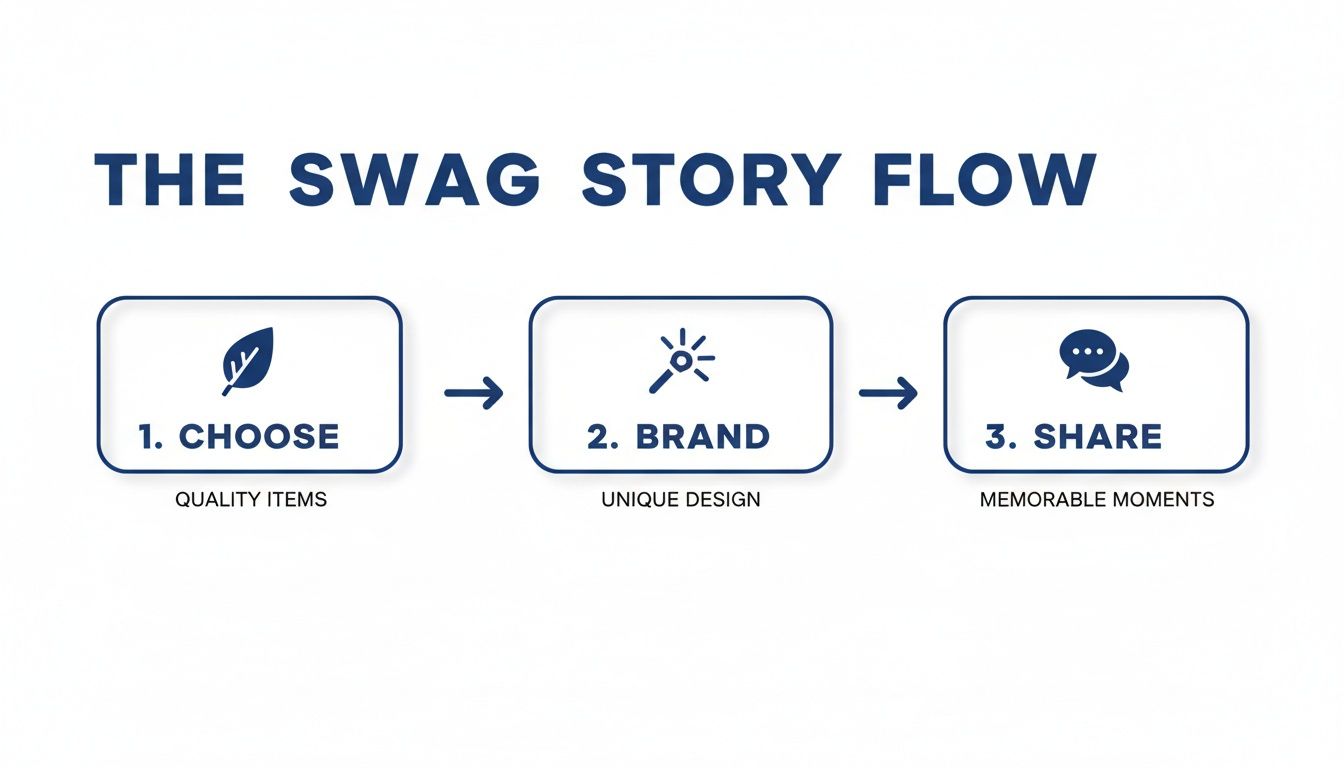
It really breaks down how a carefully chosen item, branded with purpose, becomes a powerful story you can share. This is how a simple giveaway transforms into a meaningful connection with your audience.
The best way to get started is to experience the quality for yourself. There’s something about feeling the smooth finish of a bamboo pen or the sturdy weave of a recycled cotton tote that makes the value click. It’s what solidifies the role these items can play in your brand story.
Why not start today? The best first step is often the simplest one. Go ahead and explore a curated collection of eco-friendly products and request a few samples. It's the most direct path to seeing—and feeling—how you can build a more sustainable and impactful brand identity.
Your Questions, Answered
Over the years, we've helped countless businesses navigate the world of sustainable swag. Here are a few of the questions that come up most often, along with some straight-to-the-point answers.
Do "Green" Promo Items Always Cost More?
That's a common misconception. While you can certainly find premium, high-end sustainable materials, many of the most popular options—like recycled paper or products made from wheat straw—are surprisingly budget-friendly.
It's really about looking at the bigger picture. A well-made, genuinely useful eco-friendly item gets kept and used for months, even years. That extended visibility often delivers a much better return on your investment than a cheap, disposable giveaway that gets tossed in the trash. We work with clients to find great options at every price point.
How Do I Know if a Product is Genuinely Eco-Friendly?
With so much "greenwashing" out there, this is a fantastic question to be asking. Your best bet is to look for legitimate, third-party certifications.
- For anything made of wood or paper, look for the FSC (Forest Stewardship Council) logo.
- When it comes to textiles like tote bags or apparel, GOTS (Global Organic Textile Standard) or Oeko-Tex are the benchmarks for quality and ethical production.
A supplier who is genuinely committed to sustainability will have no problem providing documentation for their claims. If they get defensive or vague when you ask for proof, consider that a major red flag.
Don't be afraid to ask for the details. Your brand's credibility is tied to the products you choose. A good partner will welcome your diligence because it shows you're serious about getting it right.
What are Some Go-To Sustainable Giveaways for Trade Shows?
At a busy trade show, the best giveaways are practical, portable, and make a great first impression. You want something people will actually use, both at the event and back at their office.
Here are a few crowd-pleasers we see succeed time and time again:
- Reusable Tote Bags: An absolute classic for a reason. A tote made from rPET or recycled cotton is instantly useful for carrying all the other brochures and goodies people collect.
- Bamboo Pens & Cork Notebooks: These feel different—in a good way. They’re lightweight, perfect for jotting down notes during a speaker session, and have a tangible quality that plastic just can't match.
- Branded Reusable Water Bottles: Long days on the convention floor mean people get thirsty. A sleek reusable bottle keeps your brand in their hand all day and becomes a daily-use item long after the event is over.
Ready to Make an Impact?
Choosing earth-friendly promotional products is more than a marketing decision—it's a statement about your brand's values. By opting for thoughtful, sustainable items, you not only reduce waste but also build a stronger, more authentic connection with your audience.
Ready to find sustainable products that people will love and remember? Explore our curated collection of high-quality, earth-friendly items and see the difference for yourself.


0 comments